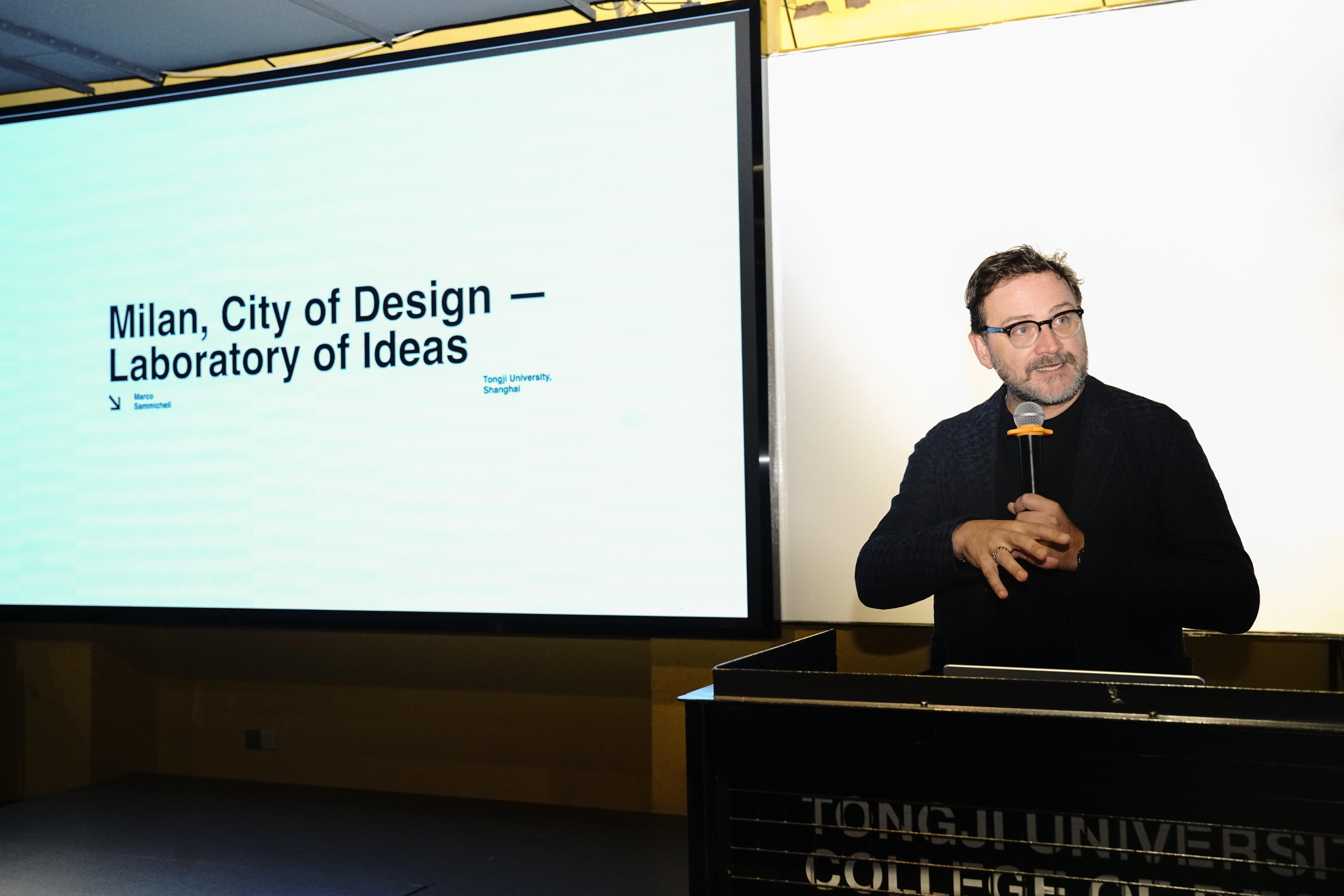
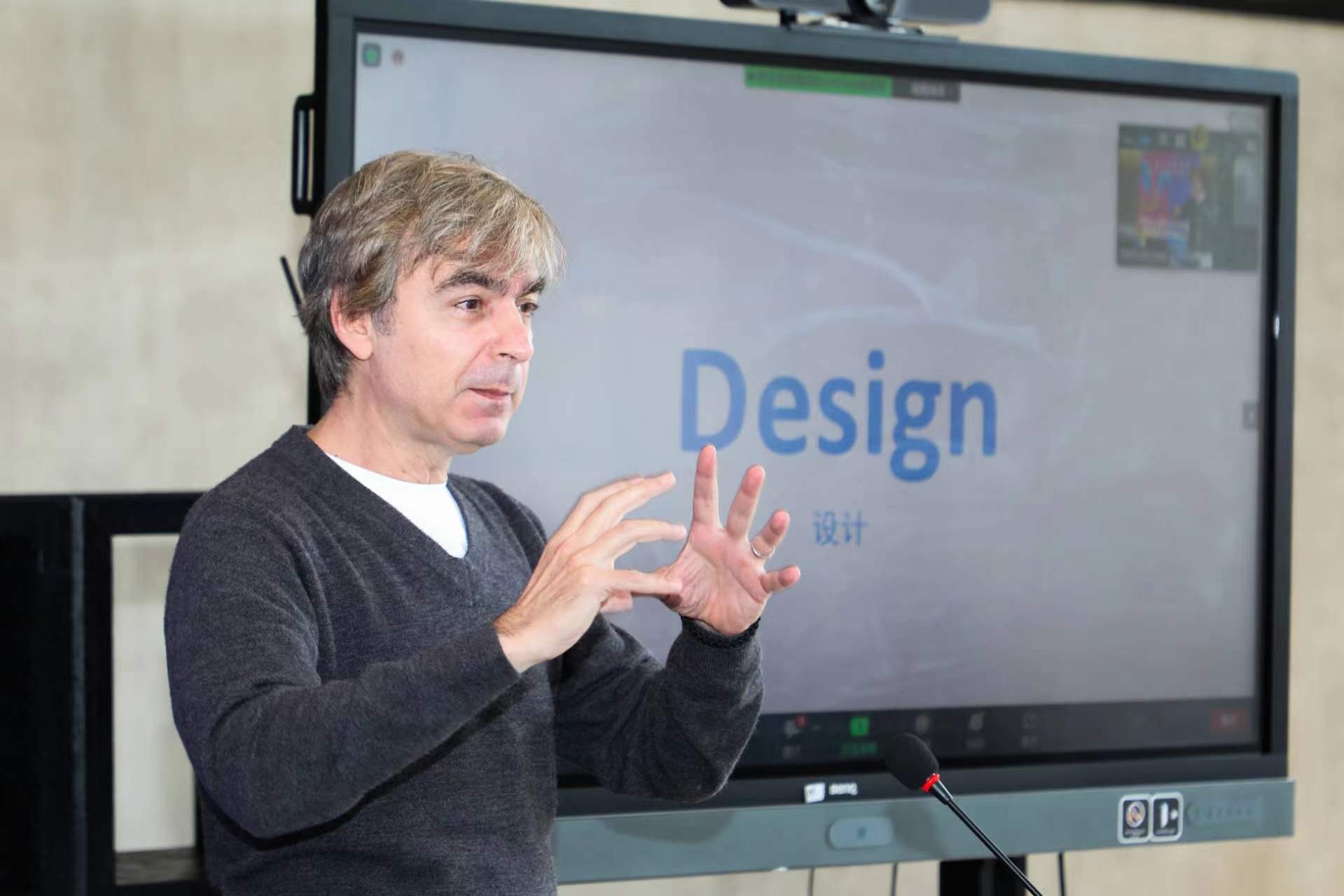
On the afternoon of October 23, Marco Sammicheli, a renowned Italian editor, curator, and design critic, visited the College of Design and Innovation (D&I) at Tongji University and delivered a captivating lecture titled "Hospitable City. Milan, Italy: a Design Lab." Professor Xin Xiangyang, Dean of the College, served as the academic host. The event was open to the public and attracted a large audience of faculty and students from both on and off campus.

At the beginning of the lecture, Dean Xin Xiangyang extended a warm welcome to Marco Sammicheli. He noted the profound historical and cultural ties between China and Italy, and highlighted the broad opportunities for collaboration between Tongji University and Milan, a global design capital, in terms of its design ecosystem. He expressed his hope that more Italian designers and scholars like Marco will come to China in the future to deepen bilateral exchange and co-creation in the fields of design, education, and industry. Dean Xin also presented a special gift to the guest—a "Chinese Ruler" designed by himself over twenty years ago. This ruler visualizes the rise and fall of Chinese dynasties, using a scale of "one centimeter represents one hundred years" to measure history. Dean Xin used this gift to symbolize the shared long history and profound cultural resonance between China and Italy.

In his remarks, Angelo Gioè, Director of the Italian Cultural Institute of Shanghai, expressed his gratitude to the organizers for the invitation. He emphasized that the lecture was not only a milestone in Sino-Italian design and cultural exchange but also a new starting point for long-term collaboration between the Italian Cultural Institute and Tongji University. He looked forward to expanding future cooperation beyond design to include architecture and urban renewal, bringing in more outstanding international scholars and creators to build a bridge for cultural communication between the two countries.
During the nearly one-and-a-half-hour lecture, Marco Sammicheli provided an in-depth analysis of the systemic ecosystem behind "Made in Italy." He pointed out that Italian design is often oversimplified by outsiders into iconic objects or brands, which obscures the complex collaborative network behind it. Milan's ability to become a "permanent design laboratory" stems from its convergence of artisans, engineers, entrepreneurs, and designers, forming a highly flexible relational network that values humanistic principles.

Through classic cases such as the Pirelli Tower, the Lady armchair, and the Attollo lamp, Marco explained the evolution of modern Italian design. He quoted the famous saying of the architectural master Gio Ponti: "It is not concrete, it is not glass, it is not iron... but it is art and culture that makes a building lasting." He emphasized that the core of Italian design is not the pursuit of luxury, but the enhancement of quality of life, dignity, and democratization. Designers are not merely stylists, but anthropologists and cultural interpreters.
In the face of the current impact of digital technology and AI, Marco offered profound reflections. He stated bluntly that if tools are allowed to dominate, humanity will face the risk of the "termination of natural intelligence." "Digital tools and AI must always remain under human control; otherwise, we will lose the joy of real contact, shared space, and emotional connection." He advised young students that they must master the rules before breaking them, and that true freedom comes from a deep understanding of history and context. He encouraged everyone to step into libraries, exhibitions, and real social scenes, rather than relying solely on search engines for fragmented knowledge.
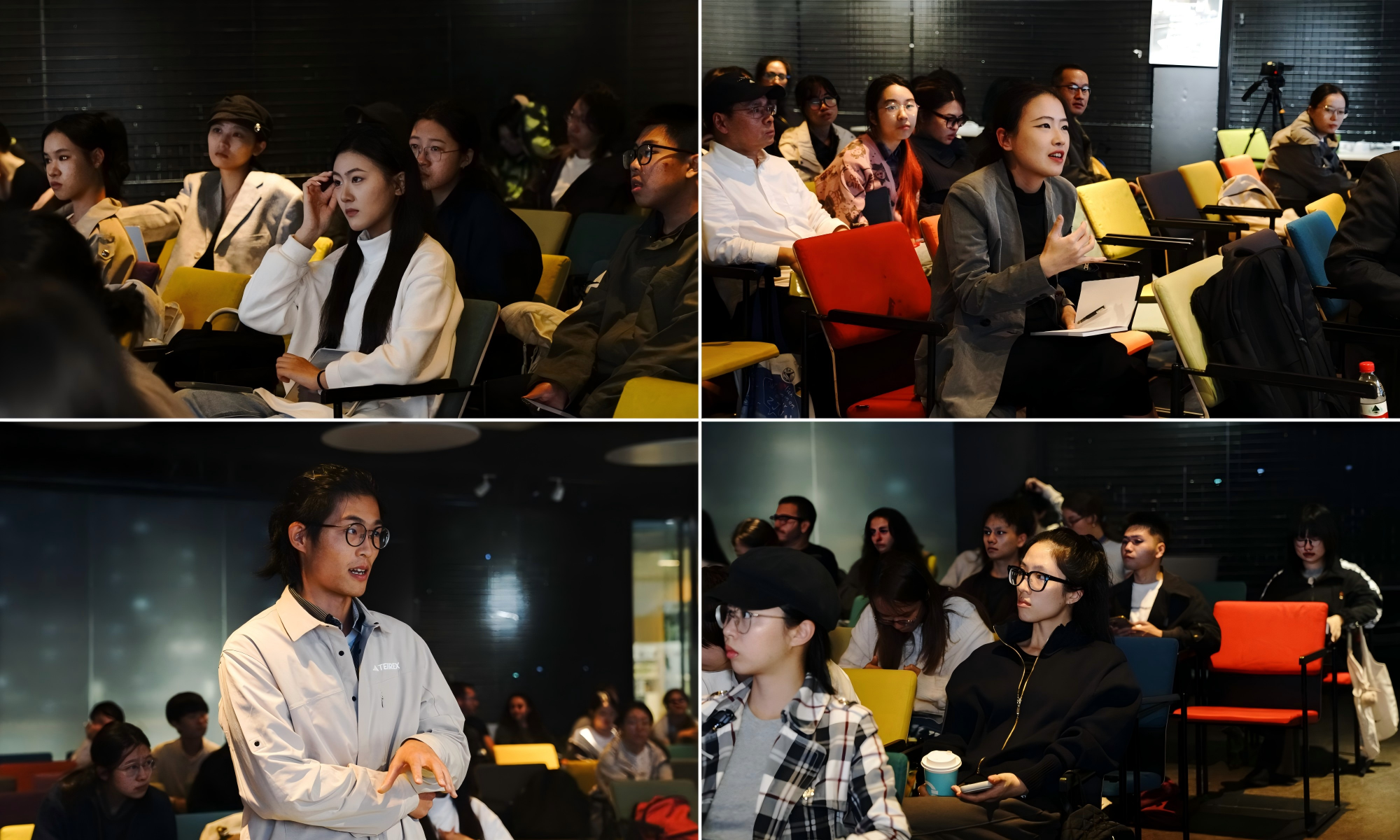
During the subsequent Q&A session, faculty and students engaged in a lively discussion with Marco on topics such as "the design relationship between Shanghai and Milan," "how to reclaim public space in a highly commercialized city," and "the contemporary transformation of historical heritage." Regarding the comparison between Chinese and Western design, Marco believed there is no competition between Shanghai and Milan. Shanghai possesses immense innovative vitality and a massive industrial foundation, while Milan maintains its unique strengths in quality control and durability. He suggested that young designers in Shanghai view design as part of urban identity, actively assume the role of public intellectuals, and "gently occupy" public spaces with culture, friendship, and creativity.
The lecture was co-hosted by the College of Design and Innovation at Tongji University, the Sino-Italian Campus of Tongji University, and the Italian Cultural Institute of Shanghai, and was held as part of the 26th Week of the Italian Language in the World. The lecture not only provided Tongji faculty and students with an opportunity to engage closely with top international design thinking but also injected new momentum into Sino-Italian design education and cooperation.